Blending 3D and AI for Better Control: A Practical AI Hybrid Rendering Workflow
As AI generated imagery becomes more common in animation and visualization, one challenge stands out above all others: artists want speed, but they cannot afford to lose control. That is where the AI hybrid rendering workflow comes in. This production method blends traditional 3D scene building with AI image generation to deliver polished visuals quickly while maintaining accuracy, structure, and consistency. The following breakdown explains how this workflow works, why it matters, and how it bridges the gap between artistic precision and AI driven style.
Why AI Alone Still Falls Short
AI tools are impressive at generating striking CG imagery, but they often struggle with precision.
They can create dramatic lighting and richly detailed environments, yet fail to accurately interpret objects, maintain consistency between frames, or avoid inventing visual elements that were never requested.
Without structure, working with AI feels unpredictable. Instead of refining render settings, artists are forced to wrangle randomness. It becomes less like art direction and more like trying to hold on long enough to get a usable result.
A More Reliable Approach: The AI Hybrid Rendering Workflow
The hybrid workflow reintroduces control by dividing responsibilities between 3D software and AI finishing tools.
Step 1: Establishing Structure in 3ds Max
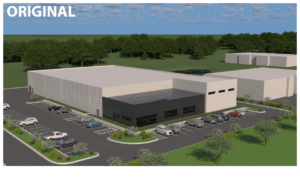
Every shot begins in 3ds Max with a simple, functional scene setup.
The goal here is not beauty but accuracy.
-
Rough geometry
-
Basic materials
-
Simple lighting
-
Placeholder props
-
Early animation passes
These initial renders act as a structural blueprint. They lock down camera moves, composition, and timing without requiring hours of shader work or fine tuning.
Step 2: Sending Blocked-Out Frames to Nano Banana
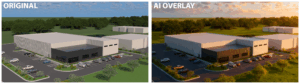
Once the foundation is in place, each frame is sent to Nano Banana, the AI model responsible for the beauty pass. Nano Banana enhances the structural render rather than inventing new imagery.
It adds:
-
Professional lighting
-
Realistic shadow behavior
-
Atmospheric depth
-
Camera imperfections
-
Surface detail
-
Environmental texture
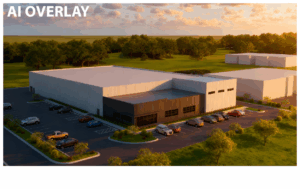
The final image feels richer, more photographic, and more alive while still respecting the layout and animation defined in 3ds Max.
Why This Method Works
The AI hybrid rendering workflow does not eliminate AI limitations, but it minimizes their impact.
Instead of starting from a text prompt, which gives AI too much freedom, the artist supplies a rigid structural render.
The AI no longer has room to drift or reinterpret entire scenes. It focuses solely on enhancement.
This maintains:
-
Consistent framing
-
Accurate motion
-
Reliable subject fidelity
-
Predictable continuity
At the same time, the AI still contributes creative energy. Small variations and happy accidents add expressiveness without compromising structure.
Faster Results Without Sacrificing Precision
Traditional lighting and look development can take as long as modeling itself, especially when realism is the goal. This workflow shifts that time investment away from technical rendering tasks and toward animation and staging, which remain under full artist control.
AI becomes the final polish.
It accelerates production, enhances visual richness, and reduces the need for time consuming manual rendering adjustments.
The result is a visual pipeline that is neither fully traditional nor fully AI generated. It is a practical, modern method for achieving high quality imagery faster and with less friction.
Where This Workflow Fits in the Future of CGI
The AI hybrid rendering workflow is not a replacement for deterministic render engines in high end VFX. What it offers instead is a realistic middle ground. It respects the structural precision artists depend on while embracing the stylistic power and efficiency AI provides.
As AI tools evolve, methods like this will continue to shape how studios combine traditional craftsmanship with machine assisted creativity. This workflow demonstrates how AI and 3D software can complement each other, creating polished images at a pace the industry has never seen before.
Do you have a project in mind? Send us a message and let’s chat!
Phone: 816-525-0103
Email: sales@trinityanimation.com
Click Here to Submit a Project Request